Before the emergence of modern banking, credit activities in Iran were largely conducted through traditional channels, including money changers and similar institutions. Modern banking began to take shape in Iran in the late nineteenth century, with foreign banks playing a role in establishing the country's earliest modern banking structures.
According to the Encyclopedia Iranica entry on the history of banking in Iran, the first modern bank to operate in the country was the New Oriental Bank, which established branches and agencies in several Iranian cities in 1888. The banking system subsequently expanded, and Iranian banks gained a more prominent position during the twentieth century.
The introduction of computers into banking marked the beginning of the digitalization of banks' internal operations. Initially, the primary objective was to replace paper-based processes with electronic information processing. As communication networks developed, this technology moved beyond the back office and gradually became part of the customer experience.
The transformation of banking can be understood through a simple distinction: in traditional banking, technology was used primarily within branches; in electronic banking, technology enabled customers to perform transactions and access services directly.
The emergence of automated teller machines (ATMs) was one of the most significant milestones in this evolution. ATMs made it possible to access certain banking services without interacting with a bank employee, gradually separating access to banking from branch opening hours.
Globally, ATMs entered operational use in the 1960s, helping reduce the banking sector's dependence on physical branches. The Bank for International Settlements has also identified ATMs, payment cards, and electronic payments as technologies that have reshaped modern banking.
In Iran, the expansion of bank cards and ATM networks laid the groundwork for the next stage: connecting banks to one another.
One of the major milestones in Iran's electronic banking development was the launch of the Interbank Information Transfer Network, known as Shetab, in 2002. Its purpose was to connect banks' card systems and enable interbank transactions.
Shetab's significance lay in the fact that a bank card was no longer necessarily restricted to the infrastructure of a single bank. By connecting different networks, the system enabled card services to be used across participating banks and gradually established a more integrated electronic payment infrastructure throughout the country.
This development marked an important step in Iran's transition from a model in which the bank was primarily understood as a physical branch to one in which the bank functioned as part of a network.
The expansion of internet access ushered in a new phase of electronic banking. Online banking enabled customers to conduct some banking operations without visiting a branch.
This was more than a technical change. It transformed when and where banking services could be accessed. For many routine transactions, customers no longer needed to visit a bank in person. Their relationship with the bank shifted from a specific physical location to a digital communication channel.
If internet banking brought the bank from the branch into the home, mobile technology represented the next step. Smartphones made access to financial services less dependent on computers or any particular location.
Mobile banking, mobile payments, and financial applications also began to blur the boundaries between banking and payment services. Users could access a range of functions through a single interface, including checking account balances, transferring money, making payments, and accessing other financial services.
Financial technology, or fintech, represents a different stage in digitalization. Technology is no longer merely a tool through which a bank delivers its services; it has become a foundation for designing new financial products and business models.
Payment facilitators, payment gateways, digital wallets, digital lending services, data analytics, and financial management platforms are among the areas that have expanded with the development of fintech.
At this stage of development, banking is no longer solely about transferring money. Data has become one of the central components of financial services.
Customer behavior, transaction histories, service usage patterns, and financial information can be used to personalize services, detect fraud, manage risk, and support credit decisions. At the same time, the growing use of digital channels has made cybersecurity and data protection increasingly important.
World Bank data for Iran indicate that, in 2024, 95% of adult men and 87% of adult women held a financial account. The data also report the use of digital payments among a substantial share of the population. These figures suggest that digital financial services are no longer peripheral technologies but have become part of everyday financial behavior.
The historical development of banking shows how technology has progressively removed earlier limitations. Physical branches imposed geographical constraints; ATMs reduced restrictions associated with opening hours; the internet reduced dependence on location; and mobile technology brought access to financial services increasingly close to users, wherever they were.
The transformation that has taken banking from passbooks and physical branches to smartphones and digital platforms is still underway. Today, the boundaries between traditional financial services and technology are closer than ever, making it increasingly important to understand emerging trends in the sector.
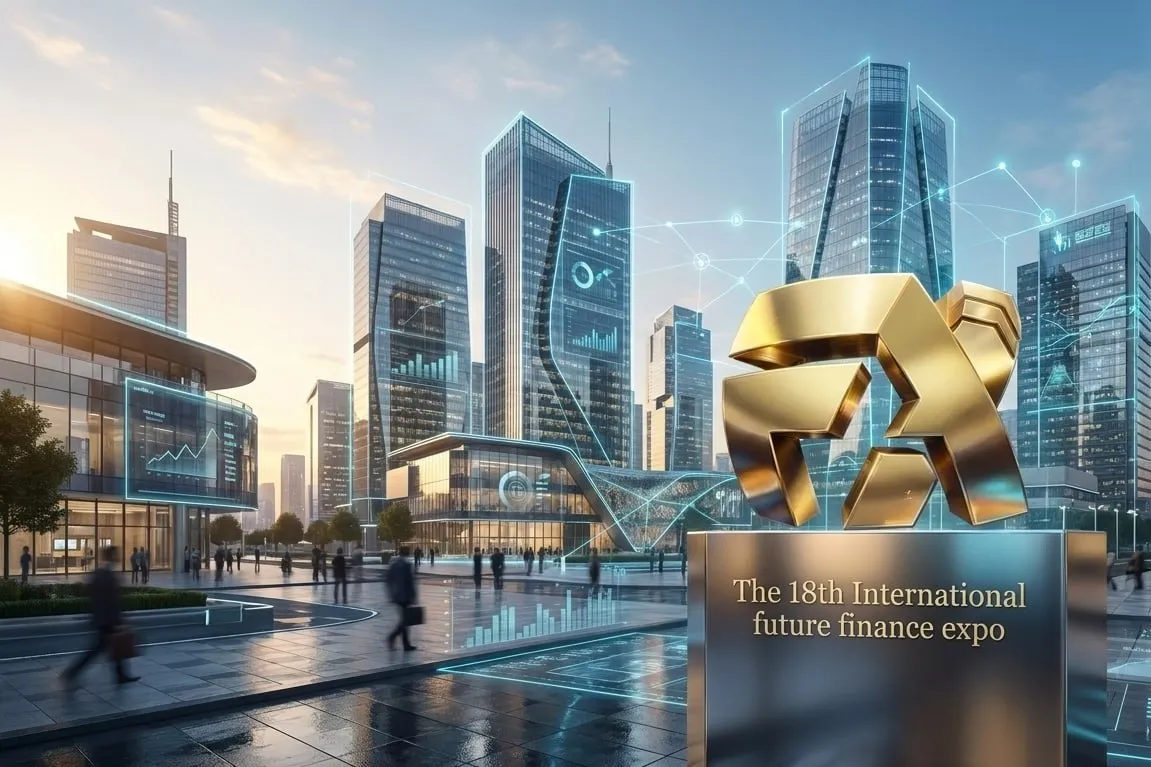
The Financial Systems, Investment, and Digital Infrastructure Exhibition (F-EX 2026) takes place at this intersection, bringing together different segments of the financial ecosystem and related technologies.
The 18th edition of F-EX will be held from November 17 to 20, 2026, at the Tehran International Permanent Fairground. Organized by Iran's Ministry of Economic Affairs and Finance in cooperation with Banian Omid, the exhibition offers an opportunity to explore developments shaping the future of the digital economy and financial services.